By Leila Levinson, JD, LCSW and clinically reviewed by Teri Schroeder, LCSW
When was the last time you sat in the woods with no purpose other than to be surrounded by trees?
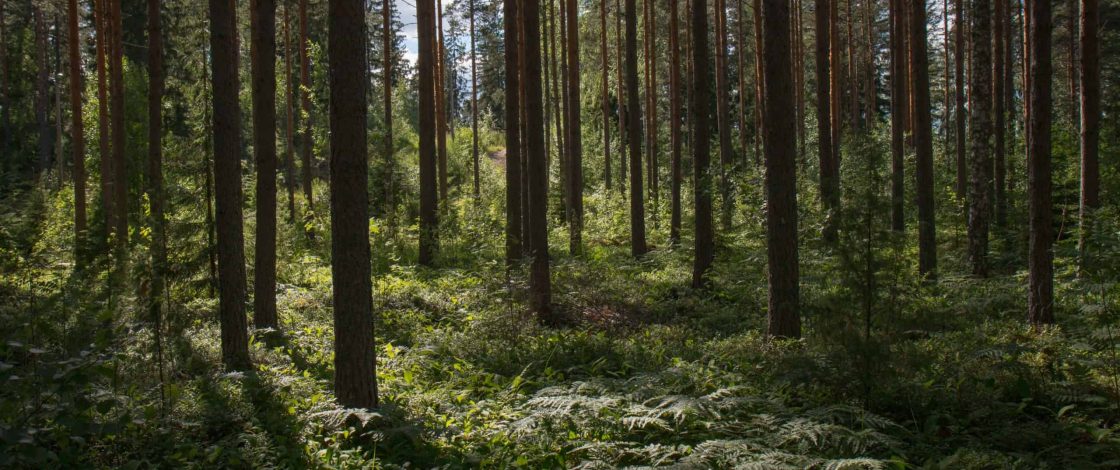
This immersion in nature is what the Japanese call “forest bathing” or shinrin-yoku. Shinrin in Japanese means “forest,” and yoku means “bath.” And just as when you immerse yourself in a tub of warm water and do nothing other than close your eyes and feel your body relax, when you forest bathe, you do nothing other than open your senses fully to the sensations of the trees: the fragrances of the leaves, the music of the birds and sounds of the leaves in the wind, the feelings of the soil and twigs. You allow your mind to quiet down, to let go, to meld with the woods.
Over the last couple of decades, writer Richard Louv has given this disconnection a name: nature deficit disorder. It isn’t a medical diagnosis, but it describes something a lot of us feel. According to the Environmental Protection Agency (EPA), the average American spends about 90% of their time indoors. A great deal of that time is on the computer, working, consuming, or on social media. Even children, who once spent most of their childhoods playing outside, now typically spend a great deal of time with electronics indoors. The pandemic has accentuated these trends, especially for people in urban areas.
The Origins and Science of Forest Bathing
Forest bathing began in Japan in the 1980s when Japanese began experiencing unprecedented stress levels due to economic pressures. Its government turned to its Forest Agency to offer a remedy. It developed the concept of forest bathing, based on Japanese culture’s reverence for nature, a reverence that has enabled not only the preservation of their forests but their vitality. Forests cover nearly 70% of Japanese total land area, which is remarkable given that the country’s human population is a little less than half of the United States’ but in a land mass roughly one twenty-sixth the size of the U.S.!
What the Science Shows
Research since then supports part of what the Japanese Forest Agency set out to find. A 2023 review of 36 studies found that forest bathing reduced symptoms of depression and anxiety, though the physical benefits were less consistent. An earlier review of 20 trials found lower blood pressure in forest settings than in non-forest ones.
Dr. Qing Li, a Japanese medical doctor who is one of the best-known researchers in the relatively new field of forest medicine, has delineated the sources of forests’ healing power:
- Higher concentration of oxygen: As compared to urban settings, forests offer cleaner, oxygen-dense air.
- Phytoncides: These are natural oils that are part of a plant’s defense system against bacteria, insects, and fungi.
As Dr. Li lays out in his book Forest Bathing: How Trees Can Help You Find Health and Happiness, phytoncides lower blood pressure and heart rates. Pine forests have the most potent therapeutic effect, as evergreen trees produce the greatest concentrations of phytoncides.
Forest Bathing vs. Hiking: What’s the Difference?
It is important to understand that hiking in the woods, mountain biking, rock climbing are not forest bathing.
Essential to forest bathing is that you have no agenda, no intention, no purpose other than to be still, to be present, to be in the moment. In this way, forest bathing shares much with mindfulness meditation, as both encourage being fully present with your senses, to let your thoughts go as easily as they come, and to quiet your ego.
However, while mindfulness seeks to create a state of focused relaxation, forest bathing seeks to create a state of communion with the natural world: to become, again, a creature of nature rather than apart from it.
How to Take a Forest Bath: Step-by-Step
I combine my hikes with forest bathing, dedicating 20-30 minutes of my time to sitting under a tree, letting myself feel the ground solid underneath me, closing my eyes and feeling the trees, the dirt, the plants and fauna.
I breathe it all in, slowly, then exhale out my tension and stress. Sometimes I lie down and look up at the canopy, the branches framing the sky. I feel how they enwrap me, cradle me. I let the forest take care of me. When I leave, I feel cleansed, renewed, and take that sustenance home with me.
Here is how you can practice it yourself:
- Find a Quiet Spot: Choose a trail or greenbelt around Austin or your local area where you can step off to a quiet spot.
- Engage Your Senses: Breathe in slowly, exhaling out your tension and stress. Listen to the wind through the branches and smell the musky odors of nature.
- Rest Under the Canopy: Lie down or sit with your back supported by a tree trunk. Look up at the canopy framing the sky.
- Let Go of Goals: Allow the forest to take care of you. When you leave, you will feel cleansed, renewed, and carry that sustenance home with you.
Healing Ourselves and Our Environment
Through such reconnection, forest bathing fosters the continued life of the forests themselves. Our American forests are stressed, showing increased signs of disease and weakness, vulnerable to fire and pests, all because of human activity, neglect, and indifference.
Forest bathing allows us to know that we belong to the web of life, that our lives are interdependent with all other forms of life. If humans are to thrive, the natural world must thrive. We can begin to heal ourselves and our world today merely by taking a long, deliberative, and slow walk in the woods.
Stop and inhale the musky odors of leaves turning red and gold. Hear the music of the wind swaying the branches. Feel the spongy moss, the contours of the bark, the grains of the dirt. Stand with your back supported by a tree and let its life force fill you and renew you. And give thanks for its canopy.
Connect with an Austin Therapist
If you are experiencing burnout, anxiety, or feel cut off from nature, incorporating mindfulness and ecotherapy techniques into your routine can restore balance.
At our Austin therapy practice, we offer holistic counseling approaches including mindfulness training, personal growth counseling, and stress management. Contact our team today to learn more about our counseling services.
Photo by Rural Explorer on Unsplash