Quick Summary:
- Election anxiety is real, common, and not a diagnosis. It responds to the same tools that work on other anxiety.
- More news does not reduce it. Scheduled news, twice a day, does.
- Movement is the highest-yield tool we recommend. A 10-minute walk beats a workout you skip.
- Do one thing that is actually in your control: check your registration, confirm your polling place, make a plan to vote.
- Get support if it outlasts the news cycle. Sleep loss, avoiding people you love, or hopelessness that stays after the results are in.
Election anxiety is the worry, dread, and physical tension that builds around a political event you cannot control. It is not a diagnosis. It behaves like one, though: trouble sleeping, a stomach that will not settle, checking your phone at 2 a.m. for news that will not change before November 3.
The fastest relief usually comes from three things, in this order. Cut how often you check the news, not whether you check it. Move your body most days. Do one small thing that is genuinely in your control.
Every election cycle since 2016, we have seen clients who never came to therapy for anxiety start bringing it up in session. Some of them had not thought of themselves as anxious people at all. That pattern is why we wrote this post, and why we update it each cycle.
What is election anxiety?
Election anxiety is anticipatory anxiety pointed at a specific date. Your nervous system treats an uncertain outcome as a threat, and because the outcome is weeks away and out of your hands, the alarm has nowhere to land. So it keeps going off.
That framing matters because it tells you what to work on. You are not going to think your way to certainty about November 3. You can change how often you poke the alarm, and you can give your body somewhere to put the activation. Those are the two levers. Almost everything below is one of them.
If this sounds familiar outside of politics, it probably is. We wrote about the same mechanism in how to reduce anticipatory anxiety.
Why does following the news more closely make election anxiety worse?
Following the news more closely feels like preparation, and it functions like reassurance-seeking. You check, you get a small hit of relief or alarm, and the checking gets reinforced either way. Nothing you learn changes what you can do next.
This is the part clients push back on most. The worry is that stepping back means becoming uninformed. In practice, the people who read one good roundup a day are better informed than the people refreshing five feeds, because they are reading analysis instead of fragments.
How do you stay informed without doomscrolling?
Staying informed without doomscrolling comes down to scheduling it. Pick two windows, morning and early evening, and read the news then. Not at 11 p.m., and not first thing before your feet hit the floor.
A few things that help clients hold that line:
- Turn off breaking news push notifications for the next few months. All of them.
- Move political accounts to mute rather than unfollow if unfollowing feels dishonest.
- Get news from a source you read, not a feed that serves you. Feeds are built to keep you there.
- Put your phone charger somewhere other than your bedside table.
The goal is not information avoidance. It is deciding when you consume it instead of letting the algorithm decide for you.
Does exercise actually help with election anxiety?
Exercise is the most reliable non-clinical tool we recommend for anxiety, and it works on election stress for a specific reason. Anxiety is activation with nowhere to go. A walk gives it somewhere to go.
You do not need a program for this. The clients who benefit most are the ones who go 10 minutes at lunch, not the ones who plan an hour and skip it. If you work somewhere the election is the only topic at the coffee machine, the walk does double duty. It moves you and it removes you.
What should you do about caffeine and sleep during election season?
Caffeine and anxiety share a symptom list. Racing heart, jitters, tight chest, that feeling of being braced for something. When you are already activated, a third coffee is indistinguishable from the thing you are worried about.
You do not have to quit. Move your cutoff earlier, to late morning if you can, and see what happens to your sleep in a week. Sleep is the piece that quietly decides how much everything else costs you. Most of the clients who tell us their anxiety got worse in October are also sleeping about an hour less than they were in August.
Does humor help, or is it avoidance?
Humor helps, and it is worth being precise about why. Laughing at something frightening does not make it smaller, but it does change your relationship to it. You are looking at the thing instead of being pinned by it.
The distinction between humor and avoidance is whether you come back. Watching political comedy for twenty minutes because it takes the edge off is coping. Watching it for three hours so you never have to think about the thing directly is avoidance wearing a better outfit.
What do you do with the feelings themselves?
Feelings do not require management so much as room. Fear and anger that get pushed down do not go anywhere. They come back as insomnia, a short temper, or a tight jaw you notice at a red light.
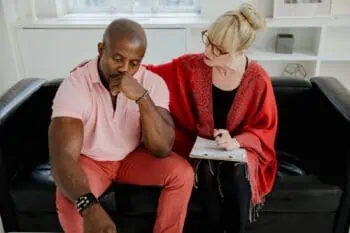
Naming what you feel out loud, to a person, is the version that works best. “I am scared about this and I do not know what to do with it” is a complete sentence and a surprisingly effective one. Journaling is a reasonable substitute when there is no one around at the moment you need it. For anxiety that has been running for weeks, this works best alongside talk therapy with a licensed clinician, because the point is not just to vent. It is to figure out what the fear is actually about.
What is the one thing that reliably helps?
The one thing that reliably helps is doing something you control. Anxiety about an outcome shrinks a little when you act on the part of it that is yours.
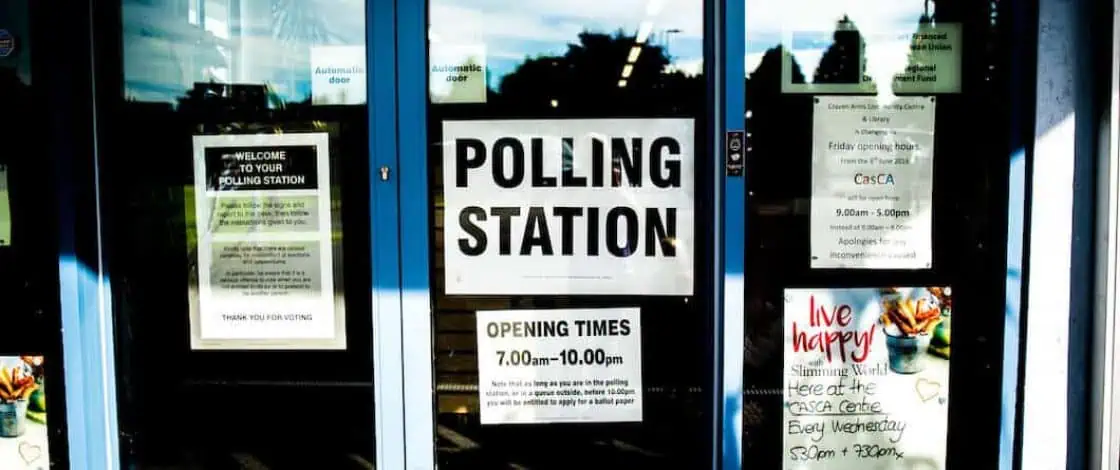
Confirm your voter registration. Look up your polling place. Decide when you are voting and put it in your calendar. Volunteer or donate if that is your thing. Then stop, because the list of things you control is short and reading more news does not lengthen it.
Texas voters can check registration and find their polling place through the Texas Secretary of State’s Am I Registered? tool.
What if the election is dividing your family?
Political conflict in families is the part people underestimate, and in our experience it produces more distress than the election itself. A result is one day. A relationship you are avoiding is every week.
Two things help. First, separate the person from the position. You can hold that someone is wrong and that they are still yours. Second, get specific about what you actually want from the conversation. If you want to be understood, say so, because most political arguments are two people trying to win a debate neither of them entered.
If a particular relationship has become the main source of stress, that is worth bringing into therapy on its own. We do this work in couples counseling and family counseling constantly, and it comes up every cycle.
What can employers do about election stress at work?
Employers can lower the temperature by naming it. The office is one of the few places people cannot opt out of political conversation, and managers who set a light expectation about it spare their teams a lot of low-grade dread.
Concretely: keep election talk out of standing meetings, do not schedule anything demanding for November 4, and make it clear that PTO is available and using it is not a statement. Just Mind works with Austin companies on this through our employee mental wellness services.
What if you feel worse after the results?
Feeling worse after the results is common, and it catches people off guard because they expected relief. The waiting ends and the meaning begins. That is often harder.
Give it a week before you judge how you are doing. In the meantime, the same tools apply, and one more: get back to routine deliberately. Sleep, meals, movement, people. Grief about an outcome is real and it does not need to be argued out of you, but it does better inside a structure than outside one.
Watch for the difference between disappointment and something heavier. Disappointment fades as normal life resumes. If two or three weeks pass and you are still not sleeping, still not interested in things you used to like, or still feeling hopeless about the future, that has moved past the election.
When is election anxiety worth talking to a therapist about?
Election anxiety is worth professional support when it stops being about the election. If you are losing sleep most nights, avoiding people you love over politics, or feeling hopeless in a way that outlasts the news cycle, the election is the trigger and something underneath it is doing the work.
That underneath part is usually where the relief is. For some people it is generalized anxiety that finally got loud enough to notice. For others it is a history that taught them the world is not safe, and an election is just the current evidence.
Where can you get election anxiety counseling in Austin?
Just Mind has 50+ licensed clinicians across two Austin locations, in North Austin on Spicewood Springs and in South Austin near Westlake, plus telehealth anywhere in Texas. We see clients from Austin, Round Rock, Cedar Park, Pflugerville, Georgetown, and across Travis County, seven days a week from 9 a.m. to 8 p.m.
Start with anxiety counseling or stress management therapy, or book an appointment and we will match you with a therapist. If you are not sure where to begin, our full list of counseling services is a reasonable place to look first.
Common questions about election anxiety
Is election anxiety a real condition?
No, not as a diagnosis. Election anxiety is a common stress response, and the symptoms overlap heavily with generalized anxiety: rumination, disrupted sleep, irritability, physical tension. It is treated the same way anxiety is treated.
How long does election anxiety last?
For most people it fades within a couple of weeks of the results. If it has not eased after two or three weeks, or if it started before this cycle and the election simply made it louder, it is worth talking to someone.
Should I stop watching the news completely?
No. Complete avoidance tends to backfire, because uncertainty is its own stressor and you end up hearing things secondhand and out of context. Scheduled news, once or twice a day from a source you chose, works better than either extreme.
What helps election anxiety fastest?
Movement and a reduced checking habit, together. A 10-minute walk changes how your body feels in the next hour. Turning off breaking news notifications changes how many times a day the alarm gets pulled.
Can therapy help with political stress specifically?
Yes. The work is usually less about politics than about tolerating uncertainty, which is a skill that transfers to everything else in your life. Approaches like CBT and somatic therapy both address it directly.
What do I do if my anxiety is about a specific policy affecting me or my family?
Name that difference out loud, including in therapy. Anxiety about an abstract outcome and fear about a concrete threat to your safety, your healthcare, or your immigration status are not the same thing and they do not respond to the same tools. The second one needs practical planning alongside emotional support, and a therapist should be helping with both.